

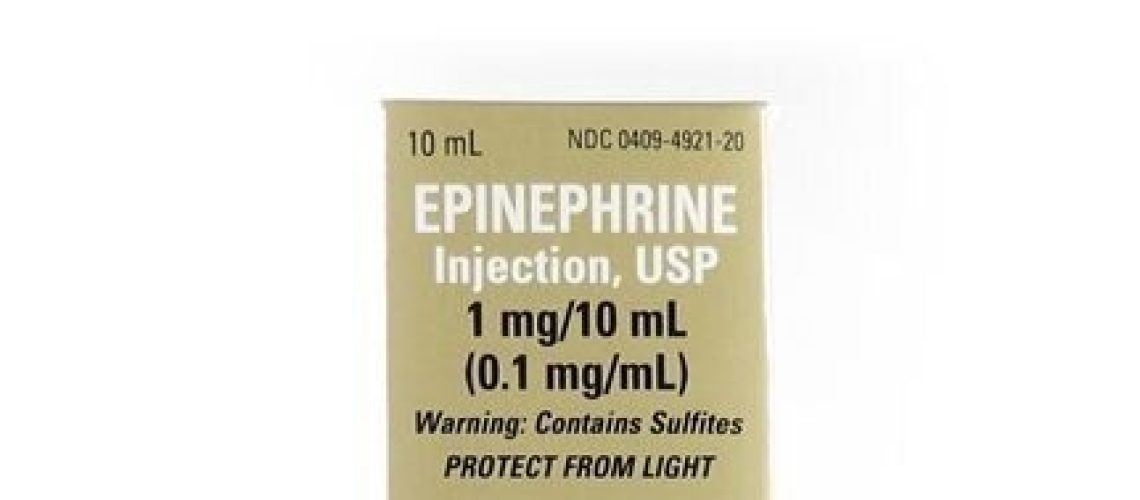
Imagine someone asks why you do something a certain way. You answer: “Because we’ve always done it that way.” In most fields, that answer would earn a condescending look. In emergency medicine, it has sometimes persisted for decades without being questioned.
That is exactly what happened with the 1 mg epinephrine dose in cardiac arrest.
1906: A Dog, a Chemist, and a Syringe
It all begins in Cleveland, Ohio. George Crile — surgeon, physiologist, and visionary — asks a question few dared voice at the time: why do some arrested hearts fail to restart?
A clarification is needed here: external cardiac massage — the heel-of-hand-on-sternum technique the world knows today — did not yet exist. It would not be described until 1960, by Kouwenhoven, Jude, and Knickerbocker. In 1906, Crile was performing open-chest cardiac massage: the chest was opened and the heart compressed directly by hand. A technique confined to the operating room, far from the accessible resuscitation we know today.
His reasoning, laid out in his original 1906 paper published in the Journal of Experimental Medicine 1, was fundamentally physiological. The work of Sollman and others had shown that an isolated heart could be made to beat again if its coronary arteries were subjected to sufficient pressure — approximately 30 to 40 mmHg. Yet cardiac massage alone could not achieve this minimum coronary pressure in the intact heart. Intravenous saline infusion could not either. And the two combined, generally, could not either.
His solution: adrenaline. But not injected into a vein. Crile first demonstrated that intravenous injection had a major disadvantage: the molecule had to travel through the right heart, through the lungs, then back to the left heart before reaching the aorta — a path far too long through a paralyzed, overdistended heart that only worsened the situation. He therefore opted for the direct arterial route: a cannula inserted into the femoral or axillary artery, directed toward the heart. This way, the adrenaline immediately triggered vasoconstriction in the strong arterial walls, generating a pressure that communicated directly to the coronaries without passing through the paralyzed heart.
The protocols of his experiments are remarkably precise. Crile documents each animal’s weight, the route of administration, the exact dose, the response delay, the arterial pressure achieved, and any complications. Sixty experiments on dogs killed by asphyxia, ether, or chloroform. The doses used: 1 to 2 cc of a 1:1000 adrenaline solution injected by the arterial route in dogs weighing 7 to 20 kg.
For a 10 kg dog, 2 cc of a 1:1000 solution equals 2 mg, or 0.2 mg/kg — via the arterial route, in a healthy animal. This is not the 1 mg IV used in humans. It is a pharmacokinetically different dose, delivered by a fundamentally different route, in an animal that does not share the physiology of a human in cardiac arrest.
Results: dogs dead for 5, 10, even 20 minutes recovered a pulse. Some survived to the next day. Crile himself acknowledged the limits of his model. He emphasized the role of timing, route of administration, and coordinated execution — nuances that posterity would quietly ignore. He also noted that healthy animals do not represent cardiac patients, and urged caution in extrapolating the findings.
The 1960s: The 1 mg Dose Enters Intracardiac Practice
After the discovery of external cardiac massage in 1960, resuscitation moved out of the operating room and into hospital corridors. The question of resuscitation pharmacology became urgent.
It was in this context that Pearson and Redding, from the Department of Anesthesiology at Baltimore City Hospitals, published in 1963 a series of experiments on 70 asphyxiated dogs2. Their question was direct: does epinephrine help, and which route is best? They compared several groups: ventilation alone, ventilation + massage, ventilation + massage + intracardiac epinephrine. The dose used: 1 ml of a 1:1000 solution injected into a ventricular cavity, i.e., 1 mg. The source? Crile, three decades earlier, and operating room practice. No pharmacokinetic justification specific to humans was offered.
The results were striking: in the group receiving ventilation + massage + epinephrine started 5 minutes after arrest, 10 out of 10 dogs recovered spontaneous circulation. Without epinephrine under the same conditions, only 2 out of 10. The effect was compelling. But the chosen dose — 1 mg IC in dogs weighing 7 to 14 kg — was never validated by a dose-response curve. It was a borrowed dose.
In 1968, Redding and Pearson returned with a more elaborate study, published in JAMA3, this time involving 105 dogs with induced ventricular fibrillation. They compared several agents (methoxamine, phenylephrine, epinephrine) and their combinations. The main finding: methoxamine and epinephrine were superior to no treatment, and the combination of epinephrine + sodium bicarbonate was as effective as methoxamine alone. The epinephrine dose remained 1 mg IC injected into the ventricle — in dogs weighing between 6.8 and 13.2 kg. That is, between 0.075 and 0.15 mg/kg, without anyone recording this as a relevant observation.
These two studies by Pearson and Redding would become the foundational references for the epinephrine dose in resuscitation. A second 1963 paper by Redding and Pearson, published in the same journal and also frequently cited, explicitly compared different vasopressor agents4. Epinephrine was used at 1 mg IC, phenylephrine at 10 mg, metaraminol at 10 mg. The alpha-adrenergic vasopressor effect was by then clearly identified as the key mechanism — increasing coronary perfusion pressure to restart the heart.
The 1970s: When Tradition Becomes Protocol
In the following decades, intracardiac adrenaline injection became standard practice in operating rooms. When a patient arrested on the table, the surgeon would inject directly into the ventricle. The doses observed as “effective” ranged between 1 and 3 mg. No one calculated doses by weight. It was given, it worked (sometimes), and the practice continued.
Then came the great revolution of modern resuscitation: the first AHA guidelines, published in 1974, updated in 1980, then again in 1986 in JAMA5. For the first time, resuscitation maneuvers were codified at a national level. And a dose of intravenous epinephrine had to be chosen — because the intracardiac route, with its risks (coronary laceration, tamponade, pneumothorax), was now discouraged except as a last resort.
The 1986 guidelines stated clearly: the recommended dose of epinephrine was 0.5 to 1.0 mg (5 to 10 ml of a 1:10,000 solution) administered IV, every five minutes during resuscitation. The reasoning of the experts at the time went roughly as follows:
“Surgeons use 1 mg intracardiac and it seems to work. Therefore, 1 mg IV should produce the same effect.”
That was it. No pharmacokinetic study in humans during cardiac arrest. No weight-based dosing calculation. No comparative trial. An extrapolation. An assumption. A panel of experts nodding in agreement.
The AHA’s 2000 guidelines, published in Circulation6, acknowledged this explicitly:
“The ‘standard’ dose of epinephrine (1.0 mg) is not based on body weight. Historically a standard dose of 1 mg epinephrine was used in surgical operating rooms for intracardiac injections. Surgeons observed that 1 to 3 mg of intracardiac epinephrine was effective in restarting the arrested heart. When these and other experts first produced resuscitation guidelines in the 1970s, they assumed that 1 mg of IV epinephrine would work in a similar manner as 1 mg of intracardiac epinephrine.”
And there it was: 1 mg every 3 to 5 minutes, for every adult, regardless of whether they weigh 50 kg or 150 kg.
The Paradox That Should Give You Pause
Let us take a moment to appreciate the pharmacological absurdity of this situation.
In routine medical practice, almost all drugs are dosed by body weight. Antibiotics, anesthetics, anticoagulants, analgesics — all adjusted to the patient. Because a 50 kg person does not have the same volume of distribution as a 120 kg person. That is basic pharmacology.
Except for epinephrine in cardiac arrest. There, everyone receives the same fixed dose.
And this is not a matter of ignorance. Animal studies from the 1980s showed that the optimal epinephrine dose lies between 0.045 and 0.20 mg/kg. For a 70 kg adult, that would mean 3 to 14 mg per dose — three to fourteen times the current standard dose. Yet the fixed 1 mg remained.
In 1992, two large randomized two-arm trials were published simultaneously in the New England Journal of Medicine: Stiell et al.7 in in-hospital arrest (7 mg vs. standard dose), and Brown et al.8 in out-of-hospital arrest. Both studies reached the same conclusion: high-dose epinephrine improves short-term return of spontaneous circulation, but does not improve survival or neurological outcomes to hospital discharge. The 1 mg standard was confirmed in the 1992 guidelines — not because it was proven, but because the higher dose was no better.
Because changing a practice embedded in global guidelines requires extraordinary evidence, and no one had yet taken the trouble to conduct the rigorous clinical trial that might have provided it.
What Crile Understood, and What We Have Forgotten
Rereading the original 1906 paper, one is struck by Crile’s rigor. He documents each experiment with remarkable precision: the animal’s weight, the route of administration, the dose, the response time, the arterial pressure achieved, and the complications. He identifies the limits of his model — healthy animals do not represent cardiac patients — and calls for caution in generalizing his findings.
He understood that adrenaline was only one piece of the puzzle. That without adequate coronary perfusion pressure, the heart will not restart. That timing, route, and coordination mattered as much as the molecule itself.
What is fascinating — and a little unsettling — is that this conceptual richness was reduced, over the decades, to a single line in an algorithm: Epinephrine 1 mg IV every 3–5 minutes.
An observation made in dogs, in 1906, reinterpreted by anesthesiologists in the 1960s, transformed into a convention by experts in the 1970s, shaped global resuscitation practice for the following century.
Why Does This Matter Today?
Not to condemn the pioneers of resuscitation. They did their best with the knowledge of their era, and they saved lives by codifying practices where none existed.
But because in resuscitation — particularly in in-hospital cardiac arrest where every decision counts — we have a duty to question our practices. To distinguish what is grounded in evidence from what rests on historical inertia.
The 1 mg epinephrine dose is not a scientific truth. It is a convention. A useful convention, perhaps, but a convention nonetheless. And like any convention, it deserves the critical scrutiny that our patients — those who trust our teams at the most vulnerable moments of their lives — have every right to expect.
The next time you draw up a syringe of epinephrine during a resuscitation, remember: you are perpetuating a tradition that began with an arterial cannula in a dog in Cleveland, more than a hundred years ago.
That is not a reason to stop. It is a reason to keep searching for better.
Com-Bos Resuscitation Consultant supports hospital teams in the continuous improvement of resuscitation quality in in-hospital cardiac arrest.
References
- Crile G, Dolley DH. An Experimental Research into the Resuscitation of Dogs Killed by Anesthetics and Asphyxia. J Exp Med. 1906;8(5):713-725.
- Pearson JW, Redding JS. Epinephrine in cardiac resuscitation. Am Heart J. 1963;66(2):210-214.
- Redding JS, Pearson JW. Resuscitation from ventricular fibrillation: drug therapy. JAMA. 1968;203(4):255-260.
- Redding JS, Pearson JW. Evaluation of drugs for cardiac resuscitation. Anesthesiology. 1963;24(2):203-207.
- Standards and Guidelines for Cardiopulmonary Resuscitation (CPR) and Emergency Cardiac Care (ECC). JAMA. 1986;255(21):2905-2989.
- Guidelines 2000 for Cardiopulmonary Resuscitation and Emergency Cardiovascular Care. Part 6: Advanced Cardiovascular Life Support. Section 6: Pharmacology II. Circulation. 2000;102(Suppl 1):I-129-I-135.
- Stiell IG, Hebert PC, Weitzman BN, et al. High-dose epinephrine in adult cardiac arrest. N Engl J Med. 1992;327(15):1045-1050.
- Brown CG, Martin DR, Pepe PE, et al. A comparison of standard-dose and high-dose epinephrine in cardiac arrest outside the hospital. N Engl J Med. 1992;327(15):1051-1055.
